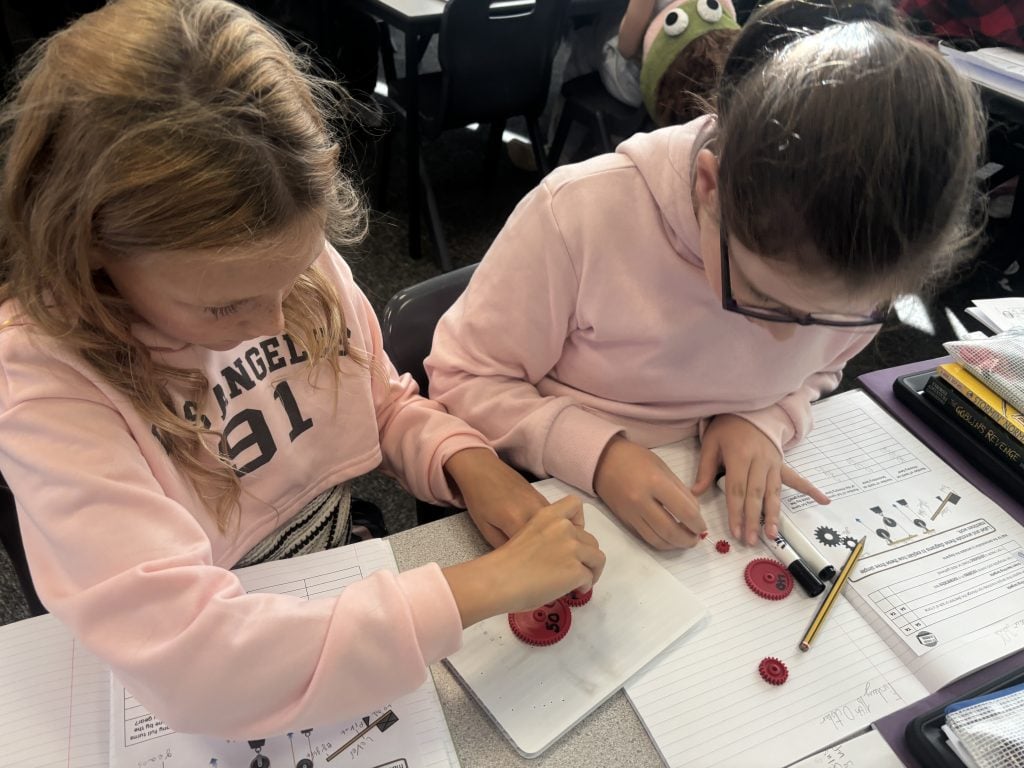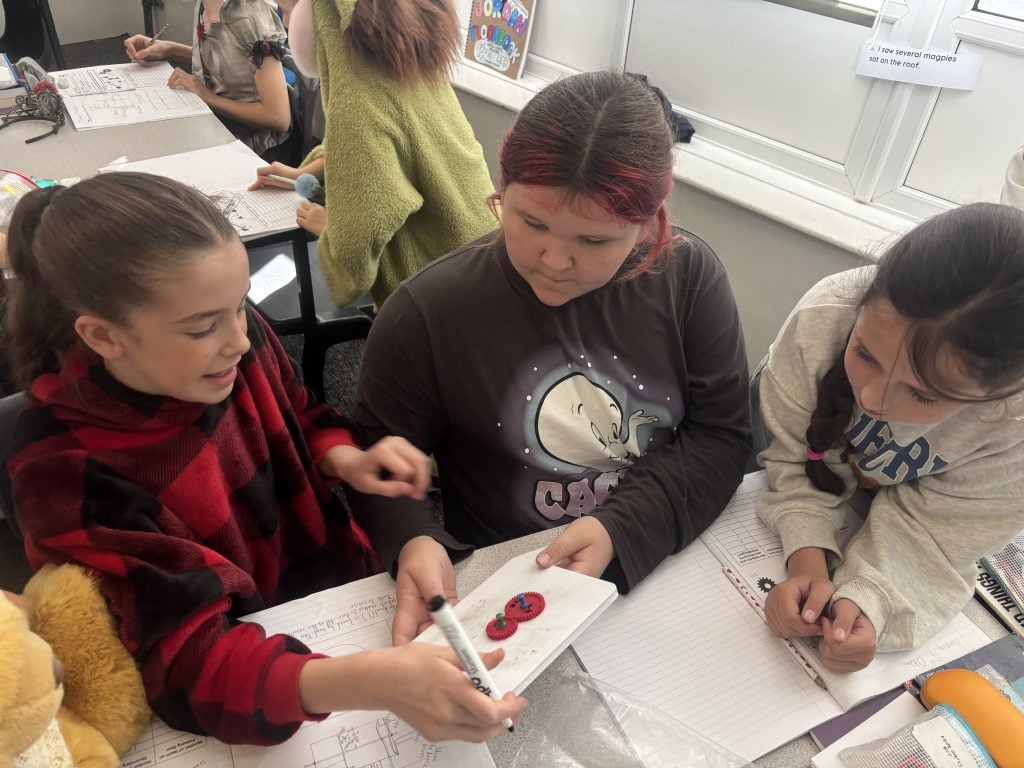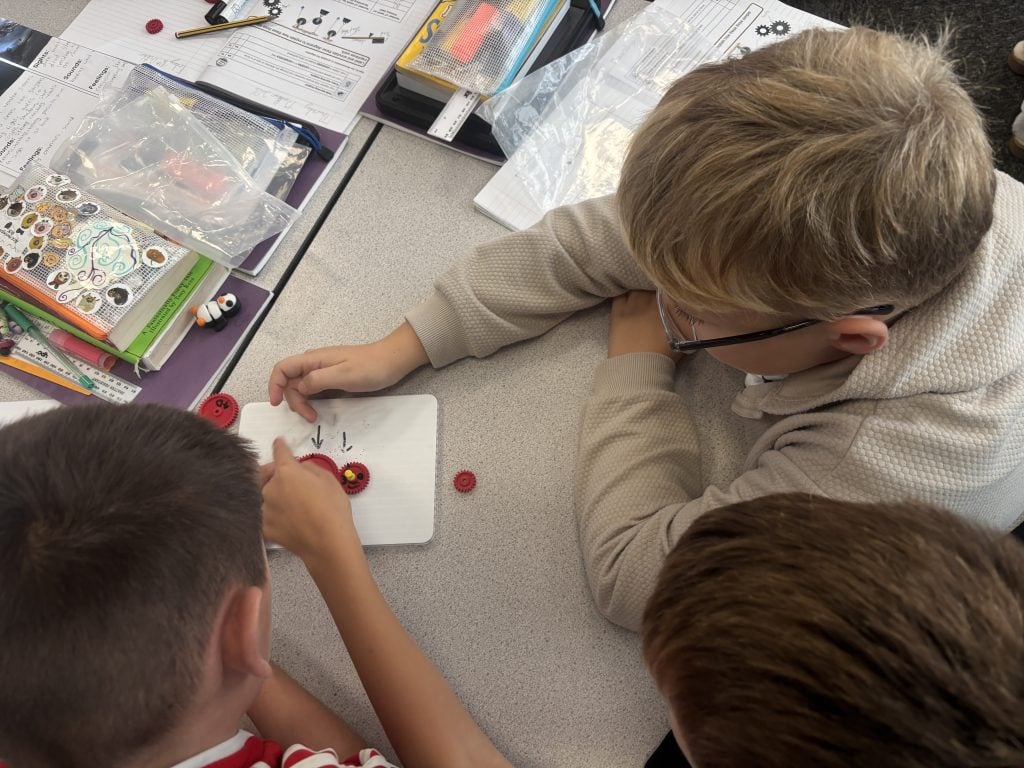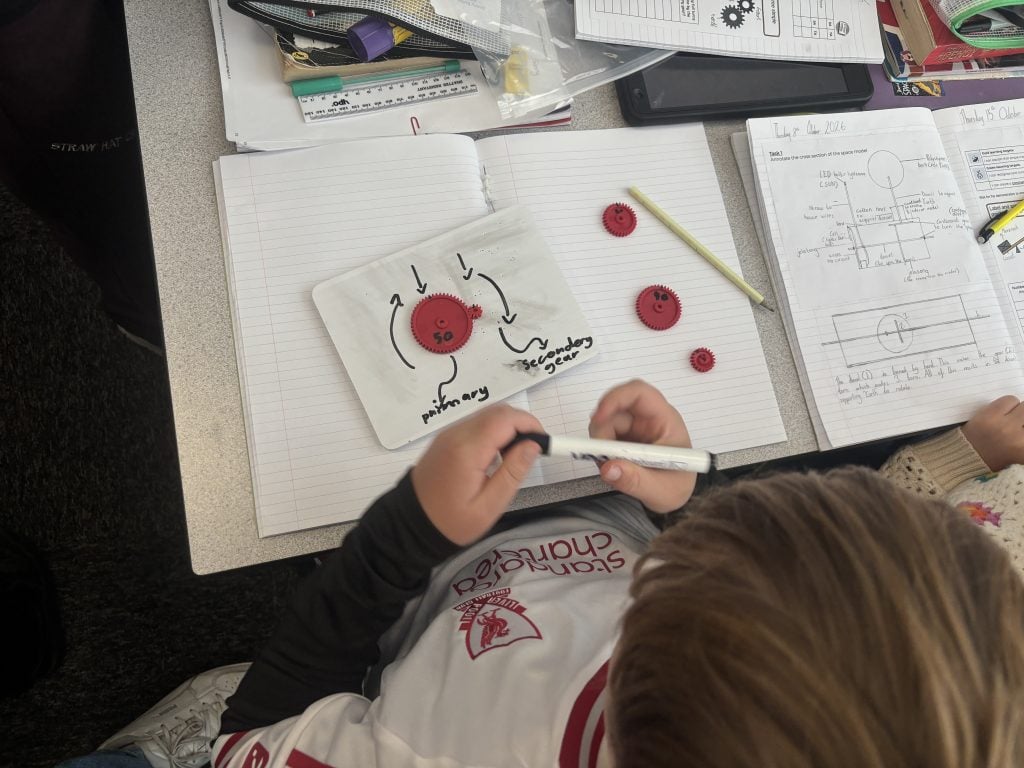
This week in Science, Year 6 have been diving into the fascinating world of simple machines to explore how mechanisms like levers, pulleys, and gears reduce the force needed to move objects and change the direction of forces. Working collaboratively in small teams, our young engineers took a systematic approach to investigating how gears interact with one another. They set up hands-on experiments, communicated effectively and measured their results carefully to uncover how variations in gear size affect force and movement.
Through their collaborative experiments, Year 6 drew brilliant scientific conclusions about how gears function: when a smaller gear with fewer teeth turns a larger gear with more teeth, the larger gear rotates more slowly but produces significantly greater force.
Conversely, driving a smaller gear results in greater speed but less output force. We are immensely proud of Year 6’s scientific curiosity and teamwork—be sure to ask your child at home how these gear principles make pedalling a bike uphill so much easier!